This story about Mary and Martha has, of course, been subject to innumerable interpretations over the centuries. Even in the third century, the great Origen spoke of the various ways this passage may be allegorized: Martha the symbol of action and Mary the symbol of contemplation, Martha the symbol of the Law and Mary the symbol of the spiritual law.[1] Treated somewhat in opposition, I’ve never been entirely comfortable with pitting Mary and against Martha like that, but sometimes we preachers do that to this story. That is, I guess, one way to read it.
For me, however, I prefer what I guess you would call the Cistercian interpretation of this story. The way Saint Aelred preached this passage, for example, he said, “[N]ever…separate these two women.” “Do not neglect Mary for Martha, nor Martha for Mary. If you neglect Martha, who will serve Jesus? And if you neglect Mary, what will be the use of the visit of Jesus, since you will not taste his sweetness?” Aelred’s point—and it’s the Cistercian point and, I think, the right point—was that “it is necessary that these two women inhabit the same house, that in one soul the two activities occur.”[2] That is, contemplation and adoration. But also, we shouldn’t forget Lazarus, Saint Bernard would later preach; for him, Lazarus was a symbol of penitence. For him the house in which Christ was present with the penitent, with the contemplative, and with the person given fully to the action of Christian charity, that was the model of a good monastery, and a healthy soul, and a healthy home.[3]
The Cistercian way of reading this story is all about living an integrated life, a life of spiritual and moral harmony, not ignoring the world or running away from it, but about living one’s life in such a way that you take time to draw upon the spiritual strength God wants to give you. The Holy Spirit works twofold, St. Bernard said, strengthening us inwardly to lead us to salvation and then outwardly to service. But first you must have an interior life, an authentic spiritual life, if you want to help others or be of any use at all. The way Saint Bernard put it: “If you discover this chaos in your own interior, what madness drives you to insinuate yourself into other people’s business?” That is, if you’re spiritually empty, how could you possibly help others? He said the Christian should be like a reservoir that from its fulness shares the graces he or she has been given; the Christian, he said, shouldn’t be like canal, merely passing along the latest thing read or said or tweeted; the Christian should be deeper than that, like a reservoir.[4] Which is why we need not neglect Mary in our lives but learn from her, sit at the Lord’s feet and pray and be possessed by him in contemplation—to try, to take time to pray, to begin, at least.
But before any of that, I wanted to talk about something even simpler. I know I’ve not shared any of my own thoughts yet; I’ve been leaning heavily on the Cistercians, which I often do. But here’s what struck me this time around, a simple something added to my customary Cistercian reading of this story. And that’s the simple fact that Lazarus, Martha, and Mary welcomed Jesus into their home. Before contemplation or work, before Lazarus’s joyful life of penitence, first they welcomed Jesus into their home just as Abraham welcomed those three men, a mysterious visitation of the Lord.[5] And that seems to me an important point, a point not to be overlooked. Have you welcomed Jesus into your home? How have you welcomed him into your home? How welcome is Jesus, you think, in your home?
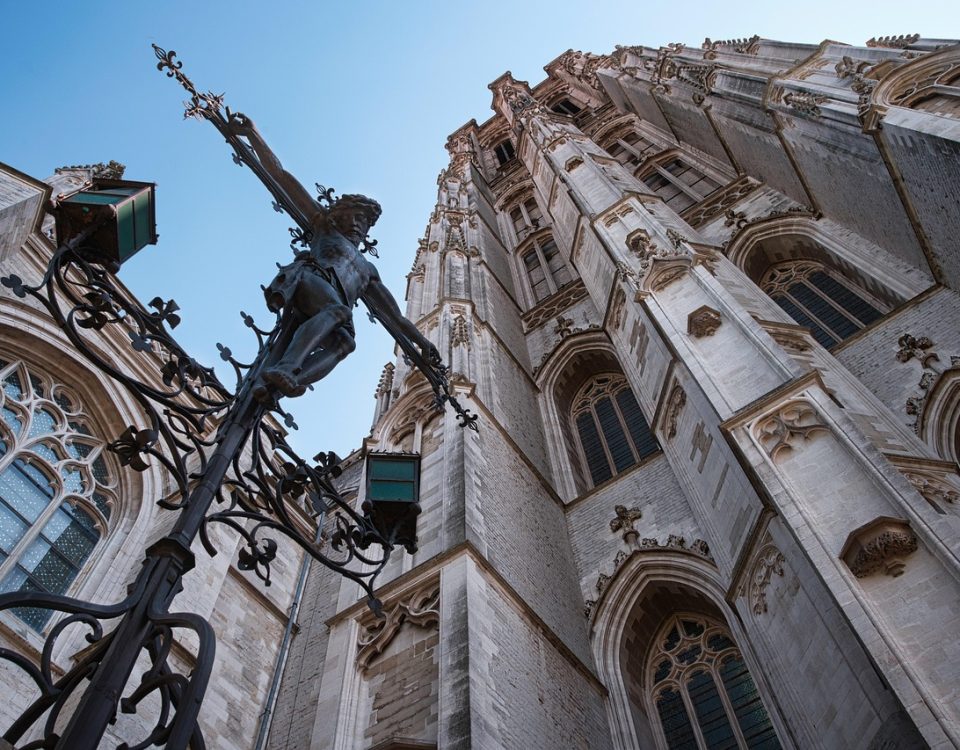
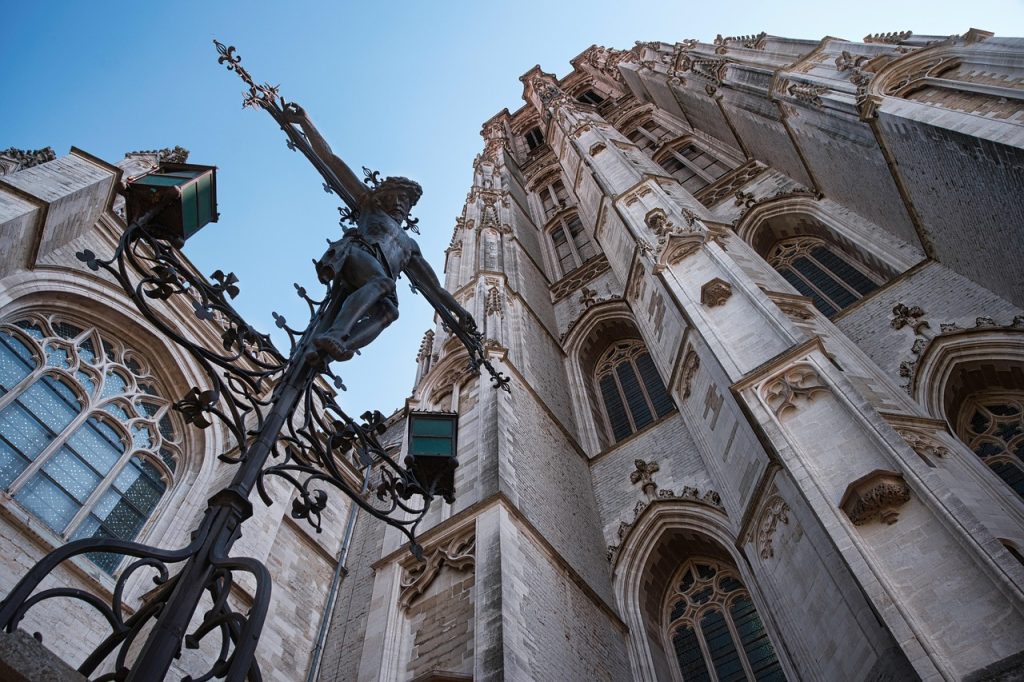
Now this may sound like a superficial question, but it really isn’t given the incarnate, material and sacramental nature of our faith. If a person were to visit you in your home, how long would it take your guest to realize you were a Catholic? Would there be a cross on your door or in the entryway? Would there be a crucifix in any of your rooms, maybe an image of Our Lady or any of the saints? Again, I know it sounds superficial, but the aesthetic is spiritual; images matter, reminders of the faith matter because they remind us of God’s presence and promise. Anyway, it seems a small point, but I think it’s a bigger point than we may think.
But it’s also obviously a question of prayer. Mealtime prayers, bedtime prayers, quiet prayer, the Rosary with family or friends, reading the Bible in silence (watching The Chosen or listening to a podcast doesn’t beat silent Bible reading, I’m afraid; the spiritual life is best lived far away from screens): all of these practices are simple ways that altogether welcome Jesus into the home. Do you have a prayer corner? You should look into that; call it a Mary corner. I don’t know, it just may change your life. What if the peace of Christ is that close and that easily enjoyed? What if these simple things are how we choose the better part?
This parish church is your spiritual home, but so is your house. This altar and the table in your home are spiritually connected. The sacred here and the sacred there are gifts of the same God, and thus a sense of reverence should be maintained in both. This parish church is holy; your home should be holy. But it’s first a matter of welcoming Jesus, opening your ears to his word within the walls of your house, your heart in silence to the image of his beauty, maybe making your home a little more like a church, because maybe that’s a beautiful thing to do. Amen.
[1] Origen, Homilies on Luke 171
[2] Esther de Waal, The Way of Simplicity: The Cistercian Tradition, 80-81
[3] Thomas Merton, On St. Bernard, 43
[4] Bernard of Clairvaux, On the Song of Songs 18.I.3-II.4
[5] Genesis 18:1-2; Luke 10:38
© 2025 Rev. Joshua J. Whitfield